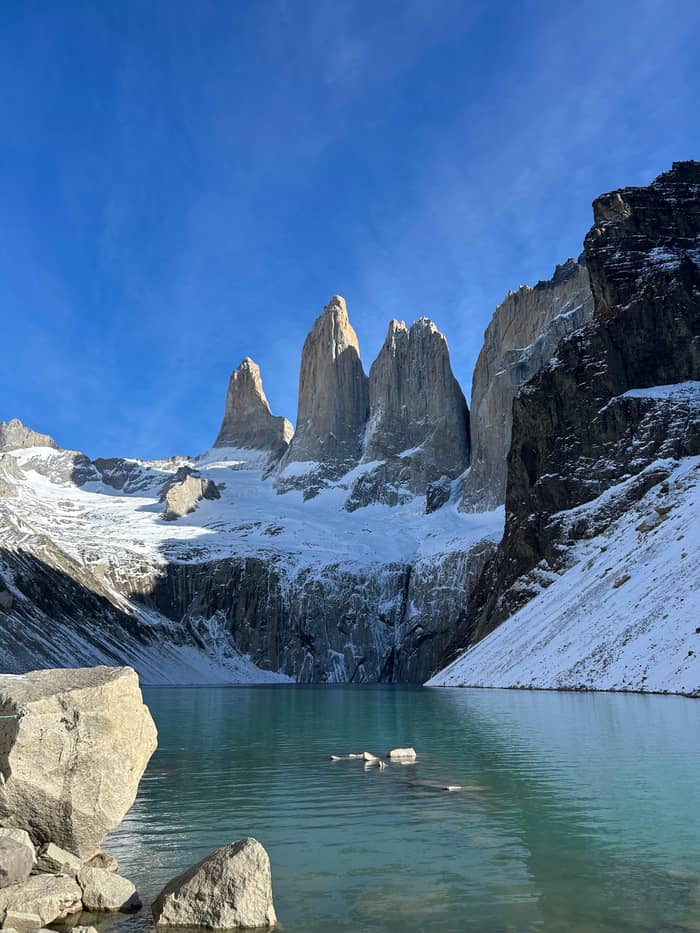
Warm months
Summer kit
December to February
- LayersBase, fleece, shell
- HeadSun hat and warm hat
- ExtraSunscreen SPF 45+
Your own checklist
Base of the Towers day hike from Puerto Natales
★ 4.8 · 878 written reviews
List of 13 items
Mark each item when done. Progress is stored on this device.
0 / 13 ready
That is everything. Only the date is left: pick the day you walk up to the towers.
Book your placeLayers for a day that starts cold and windy and turns sunny on the rocks, the footwear and poles the trail demands, and the small things people forget in Puerto Natales.
Editorial team, baseofthetowershike.com · Updated November 12, 2026 · Takes 7 min
Essentials
The clothing question on a Mirador Base Las Torres day hike is not what the weather will be, but how many kinds of weather you will get. CONAF warns that Patagonian weather changes quickly and asks walkers to wear layers that cope with rain, wind and snow.1 Las Torres Patagonia describes mornings of cloud and icy wind that can give way to strong sun and heat later in the day.8
That is why a layering system beats a single heavy coat. Chile's tourism service lists thermal, fleece and waterproof layers, gloves and trekking poles as essentials for this route.9 You add and remove layers all day: off on the first climb, a shell on at the windy pass, a warm layer at the lagoon where you sit still, and everything back on if the cloud comes down.
Expect to sweat on the climbs, so plan your layers to avoid a chill when you stop. Quick-drying synthetic or wool fabrics handle this far better than cotton, which stays wet and cold against the skin for hours once it soaks through on the climb. Leave the jeans and the cotton hoodie in Puerto Natales.
Las Torres Patagonia publishes seasonal ranges for the park. In spring it gives a low of 3°C and a high of 15°C, and in summer a low of 1°C and a high of 23°C.12,13 Autumn runs from -1°C to 11°C and winter from -1°C to 7°C.14,15 Even a summer day can start near freezing, and the lagoon below the towers, in the shadow of the granite walls, often feels colder than the valley you walked up.
Wind matters as much as temperature. The operator's figures run from a 20 km/h breeze up to gusts of 110 km/h.11 Its blog adds that the summer wind is stronger than the winter one and changes how cold it feels, while rain can come at any time, even in summer.16 A forecast of sun is never a reason to leave the waterproof jacket in your room.
So the warm months do not mean light packing. A windproof shell and a warm hat earn their place in December as much as in April. In winter the trail is another world: CONAF warns of paths under 20, 30 cm or more of snow and lists high-top boots, poles, microcrampons and a three-layer system among the essentials.17,18
Start the kit with your feet. Las Torres Patagonia calls high hiking boots ideal, preferably a pair you have already worn so the material is not stiff on demanding ground.2 Its gear list allows comfortable boots or hiking shoes, broken in before the trip, with synthetic or wool socks.22 Brand-new boots straight out of the box are the classic source of blisters on this trail.
The reason is the last hour. CONAF rates the final section over the glacial moraine as demanding and warns that it can injure leg joints.23 On large, uneven boulders, ankle support and a stiff sole help, and a deep tread grips wet granite. Trail shoes work for some experienced walkers in dry weather, but they leave little margin on a wet or icy day.
For a Base de las Torres hike, pack a spare pair of socks in a plastic bag and change at the lookout if your feet are damp. Gaiters, which the Las Torres list suggests for mud, snow or water, keep stones and grit out of your boots on the moraine and spare you a wet foot at the stream crossings.24 Blister plasters weigh nothing and belong in every pack.
Kit questions
Find your gap in the kit and the quickest way to fill it.
If I have no trekking poles
Rent in Natales
Las Torres Patagonia says poles can be rented in Puerto Natales.19
If I only have trail shoes
Wear boots if you can
High hiking boots are ideal on this trail.2
If I do not want to carry lunch
Buy it at Chileno
The refuge has a dining room and a cafeteria.20
If I have only a card
Bring some cash too
Card payments depend on a satellite link that can fail.21
If I am hiking in winter
Book a guide and gear
Winter walks need a certified guide and specialist kit, by Sernatur's rules.9
Kits by season
Warm months
December to February
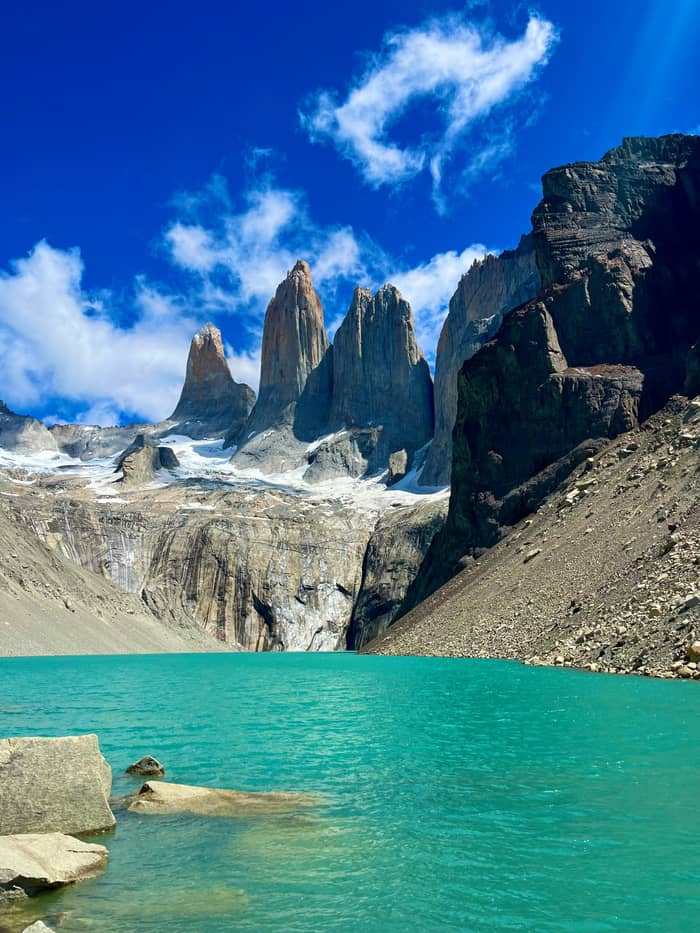
Cool months
Spring and autumn
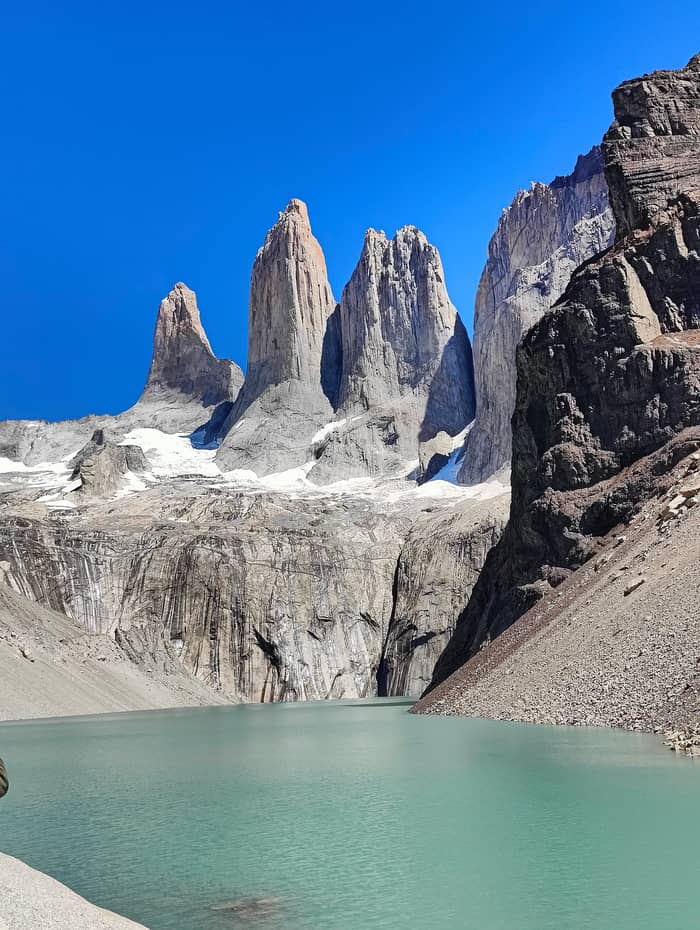
Snow months
Guide compulsory
Do not leave the poles behind. CONAF's park page still lists trekking poles and microspikes as required on the Base Torres trail, while the bulletin for this season strongly recommends poles beside good mountain boots and layered clothing, so treat them as part of the entry ticket.3,4 On the descent they take a real share of the load off your knees.
If you did not travel with them, rent them in town. Las Torres Patagonia does not rent poles, crampons or gaiters at its Welcome Center, but notes they can be rented in Puerto Natales.19 Sort this out the afternoon before your hike, since your pickup on our day comes between 6:15 and 6:45, before most shops open.
Some guided days solve it for you. One listing with transfer includes trekking poles and ice crampons whenever conditions call for them. Our day does not list equipment, so assume you bring your own and ask at booking if you need advice on the conditions for your date. A rental shop can also tell you whether there is ice on the trail that week.
Layers through the day
Dawn pickup
Pickup in Puerto Natales comes between 6:15 and 6:45.
First climb
Mornings bring cloud and icy wind, then sun and heat.8
Windy pass
Paso de los Vientos greets walkers with a strong breeze.10
Chileno
Refill water at the refuge before the forest.5
Moraine
No shade on the final rocky climb.6
At the lagoon
Gusts in the park can reach 110 km/h, so cover up while you sit.11
Water is easy to find but heavy to carry, so start with a full bottle and refill on the way. Las Torres Patagonia names the hotel lobby and the Chileno refuge as the places to refill.5 If you top up from streams, take water from small side streams, avoid the main rivers that run past trails and camps, and never drink still water.25
Food is your own affair on our day, since the listing names no lunch. Pack a solid lunch and snacks from Puerto Natales, or buy food at the Chileno refuge, which has its own dining room and cafeteria for walkers passing through.20 Eat a little at every rest, not a big meal at the top, so you have energy left for the descent.
Everything you carry in comes out with you. Las Torres Patagonia reminds walkers that there are no bins on the trail and suggests a bag for your waste.26 Leaving trash in the park can bring a fine of up to CLP 200,000 under Law 21,123, and stoves are strictly banned in the Chileno sector because of the fire risk.27,28
Video
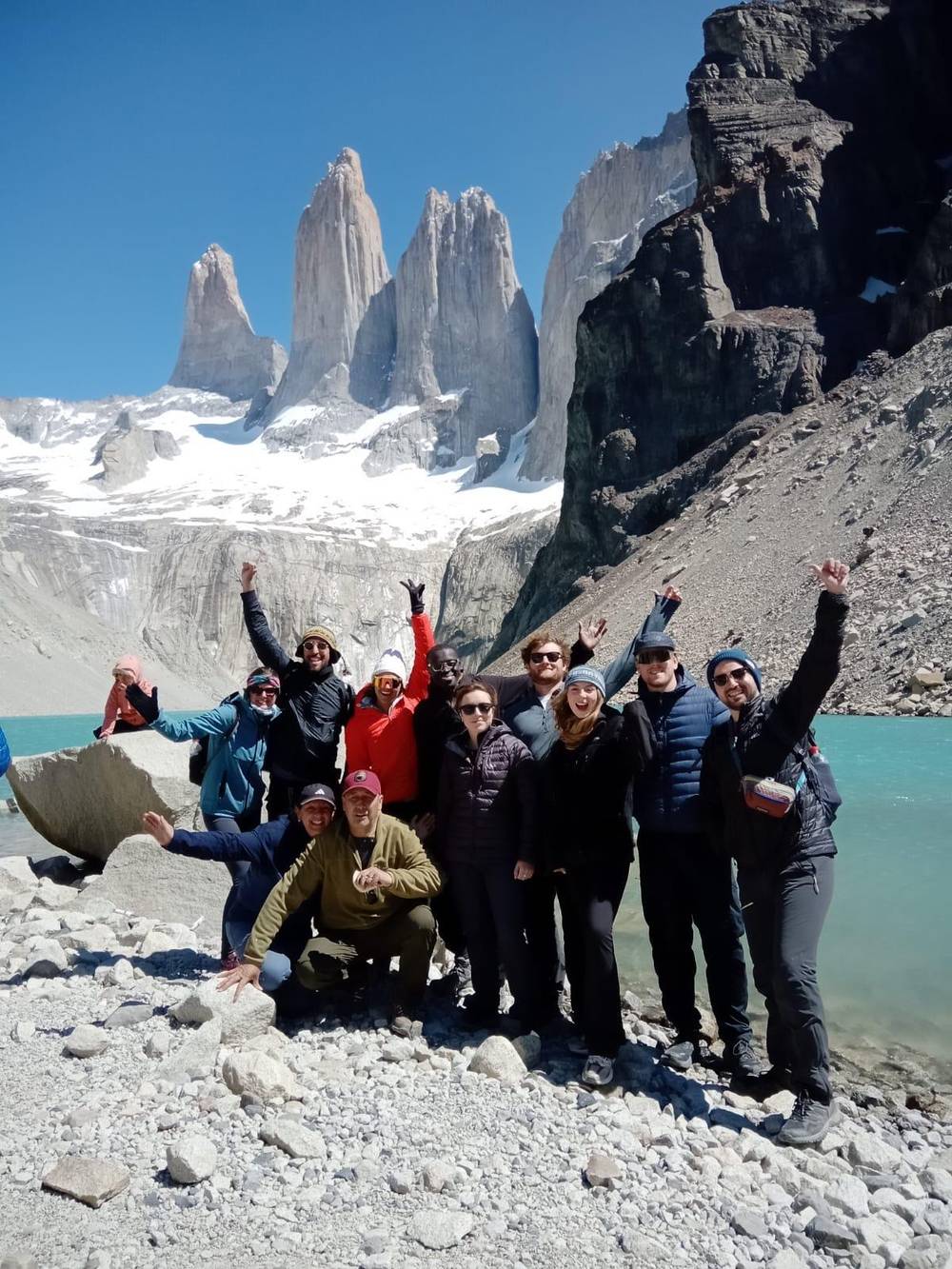
World Wide Trekking on YouTube · The video only starts loading on your tap.
The final stretch is a steep rocky trail with no shade, so reapply sunscreen when the sky is clear.6 The Las Torres gear list includes sunscreen of SPF 45+, lip balm and sunglasses with a UV filter, plus a hat for warmth and shade.7,24 Wind and glare from snow or the pale granite add up quickly, and a burned face on a cold day is a common souvenir of the climb.
Bring some cash: the Welcome Center has no cash machine, and card payments rely on a satellite link that can fail in bad weather.21 The reserve takes cash in Chilean pesos or US dollars.29 A few small notes cover a coffee at Chileno or the shuttle if you travel without a tour, and they are the fallback when the card reader goes quiet.
Keep your documents dry and to hand. The CONAF park pass is bought online, and Las Torres Patagonia advises carrying it printed or as a phone screenshot, since the entrance gate has no internet connection.30 Keep your insurance details with you as well, since our day makes travel and medical cover a condition. A headlamp with fresh batteries completes the kit.7
For a Base Torres hike in Chile between December and February, the core kit is a breathable base layer, a fleece, a windproof and waterproof jacket, light gloves, a sun hat and a warm hat. The summer range of 1°C to 23°C published for the park shows why both hats belong in the bag.13 Add a light pair of gloves for the windy pass and the lookout.
In spring and autumn, add warmth. The seasonal lows of 3°C in spring and -1°C in autumn call for an insulated jacket, thicker gloves and a buff for the neck.12,14 The Las Torres list names a jacket with synthetic insulation, rain trousers and a buff among its recommendations.24 A thermos of something hot is a small luxury that makes a long rest by the lagoon far more pleasant.
In winter, the rules change. Sernatur, Chile's tourism service, lists a certified guide and special gear as obligatory then, and warns that bad weather may cancel the walk altogether.9 Beyond warm clothing, CONAF lists microcrampons, poles, high-top boots and a personal first-aid kit.18 Treat a winter visit as a mountain expedition rather than a hike.
FAQ
The Las Torres Welcome Center does not rent them, but shops in Puerto Natales do.19
Las Torres Patagonia suggests refilling in the hotel lobby and at the Chileno refuge.5
Pack lunch from Puerto Natales or buy food at the Chileno refuge cafeteria.20
Cards depend on a satellite connection, and you will find no cash machine at the Welcome Center.21
Las Torres Patagonia gives a summer range of 1°C to 23°C for the park.13
Sources
Related guides
Planning the Base Torres day? Ask a real person.